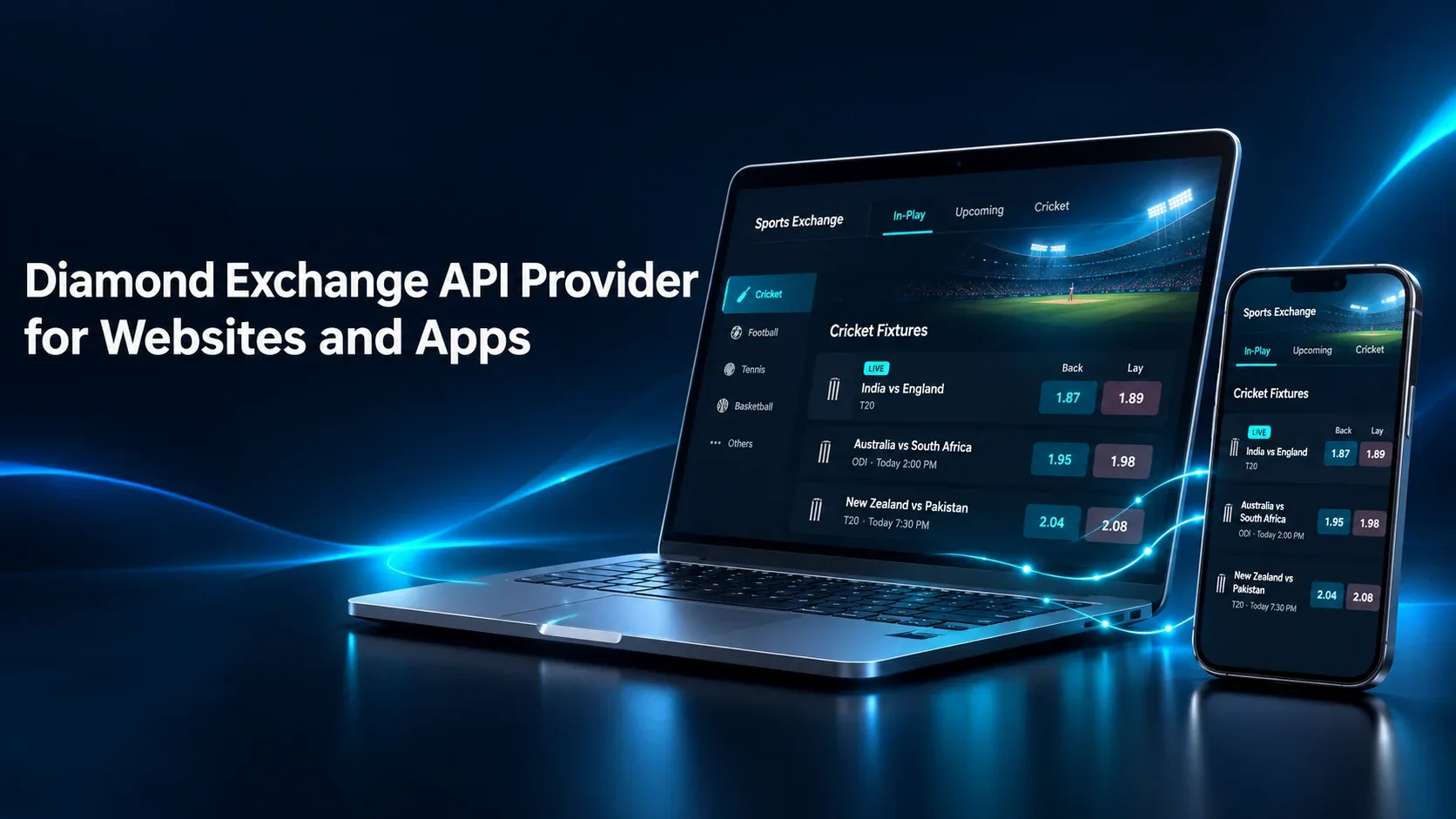
Choosing a Diamond Exchange API Provider starts with knowing what your platform needs to do. Maxway Infotech helps businesses plan and build the connection between a selected API and their website, mobile app or backend. If you already have API documentation, we can use it to discuss which features your platform needs and what it will take to implement them.
- API documentation and compatibility review
- Backend integration for websites and apps
- Custom development scoped around your platform and API permissions
Discuss your API integration project
What is a Diamond Exchange API?
A Diamond Exchange API is a software interface that lets a compatible sports betting platform exchange data with a selected supplier. Depending on your account permissions, it may provide events, markets, odds or transaction updates. An integration partner connects those functions to your platform and tests how they behave during normal use and service interruptions.
What does the API do for your platform?
An API gives your software a defined way to request data or receive updates from another system. Suppose you want to display a cricket match. Your backend needs to identify the event, match it to the correct markets and decide what users see when a market closes or its price becomes stale. The supplier provides the supported data. Your platform determines how that data appears and how it behaves.
Scope depends on what your business needs. A product that displays fixtures and odds can focus on data updates and clear status messages. A platform that also sends transactions needs to establish which system confirms each action and how the two systems resolve differences. If you only need a data feed, start by reviewing the sports odds API integration options.
How to compare a Diamond Exchange API Provider and an integration partner
When buyers search for the best Diamond Exchange API Provider, the most useful first step is to identify who controls access and who owns the implementation. One company can fill several roles. Ask each company to specify its responsibilities in writing.
| Role | Typical responsibility | What to verify before signing |
|---|---|---|
| Original API provider | Operates the upstream service and defines the available functions and access rules | Who issues credentials, what your account can use and where changes are documented |
| Reseller or aggregator | Arranges access or combines services under its own commercial agreement | The upstream source, permitted usage, renewal charges and who takes support requests |
| Integration partner | Connects the selected service to your software and builds agreed workflows around it | Which components it will deliver, how they will be tested and who will maintain them |
Confirm who can investigate an incident. If a price stops updating, you may need the supplier to check its feed and your development team to check how your app processes updates. A named contact on each side can shorten the time it takes to identify the cause.
What Maxway Infotech can deliver
Maxway Infotech offers Diamond Exchange API integration planning and supporting development for betting websites and applications. For an existing platform, the initial review can cover your backend, how you currently display markets and which parts of the user journey the API will affect. For a new platform, the discussion can cover the website or app, supporting backend and the admin features your operations team needs.
An integration scope can specify the data or actions the supplier makes available, the application screens or services that will use them and the tests required for handover. Agree separately on who will obtain the vendor account and manage access renewals. If a reseller is involved, ask whose agreement governs your usage and which company handles access issues.
Features to check before development
Authentication and account permissions
Authentication is how the supplier verifies that a request comes from an approved system. Ask for the documentation version, authentication method, access limits and any differences between test and production accounts. Where the architecture calls for a backend connection, keep supplier credentials there so your website or mobile app can use the data without carrying those credentials.
Events, markets and odds updates
Check the fields available for each event and how the supplier identifies related markets. If your site uses more than one feed, agree on how your team will match the same fixture across sources. Ask how live updates arrive and what your platform should display when an event is postponed, a market is suspended or the most recent price is too old to display as current.
Transactions, settlement and wallet updates
If your agreement covers transactional functions, define how the platform handles a pending request, a rejected action and a delayed result. A callback is a message the supplier sends to your backend when something changes. Where callbacks are available, agree on how to handle duplicate messages and how to compare platform records with supplier records. For broader feed and settlement requirements, see Maxway's sports betting API integration service.
Admin access and reporting
An admin dashboard can help operations staff find failed requests, review discrepancies and see whether an update reached the platform. Decide which staff roles can view records, change settings or approve an action. If your project also involves a D247 admin panel, scope D247 panel setup and D247 panel customization against the panel's own access terms, interfaces and permissions. See Maxway's D247 panel setup and integration service.
How a connection might work
Consider a hypothetical platform that displays live cricket markets. Its backend receives an event and its market prices from the selected supplier. The backend matches them to the fixture already shown on the site. The website displays the latest supported price and uses an agreed status when the source marks a market as suspended or an update is overdue.
The same example raises two questions before launch. How long can a price be displayed as current after updates stop? How will an operator know whether the issue came from the feed or the platform? Agree on both answers before development so the team can test them. For sport-specific considerations, read Maxway's guide to cricket betting API providers.
How implementation progresses
- Review the requirements. List the platforms you want to connect, the functions you need and the workflows your staff use today.
- Review supplier documentation. Check permissions, supported functions, sample responses and whether a test environment is available.
- Define the architecture and scope. Decide where requests run, which system holds each record and what the platform should do during a timeout.
- Build and integrate. Connect the agreed functions to the backend and to the website, app or dashboard components listed in scope.
- Test normal use and failures. Check representative events and supported actions. Include delayed updates, supplier errors and expected traffic levels.
- Deploy and hand over. Agree on production access, who approves the release and which documents or code the client receives.
- Plan ongoing support. Assign responsibility for monitoring, vendor changes, bug fixes and new development after launch.
Who benefits from this service?
An established platform adding a new feed. A business may need cricket market data alongside an existing source. Start with a sample fixture and confirm how both sources identify it before mapping a full schedule.
A business launching a new product. An early scope review can identify which functions are available under the selected agreement and which require custom work. A first release can prioritize the supported functions the team can test and operate.
An operations team reviewing its admin tools. A team may have an integration in place but still rely on manual checks when records differ. A scoped dashboard can make discrepancies easier to find if the required records are available. If you lack supplier documentation or a clear route to account access, begin with a feasibility review before commissioning the full build.
Working with Maxway Infotech in India
If you're comparing a Diamond Exchange API Provider in India, Maxway Infotech is based in Jaipur and lists integration, backend development and website and app work for this service. Use the first discussion to establish how the proposed integration fits your current technology, which parts Maxway would develop and which ones depend on the supplier. The platform's intended operating market also belongs in that discussion because vendor terms and project requirements can vary by market.
What affects pricing and delivery time?
A quote depends on the number of supported functions, the state of the existing codebase and whether the project includes an app, website or admin dashboard. Access to documentation and a test account can also affect scheduling. If the API supports transaction and settlement functions, allow time to verify how records match across systems under normal and failure conditions.
- One-time development fees can include discovery, implementation, testing and deployment support.
- API access and licensing charges depend on the supplier agreement and may renew separately.
- Infrastructure costs can cover hosting, databases and monitoring.
- Maintenance charges depend on who handles support, upgrades and changes to the agreed feature set.
If you are also comparing D247 panel pricing, request a separate breakdown for panel access, setup, customization and recurring fees. Before approving either estimate, ask what inputs your team must supply and how changes after approval will be quoted.
Frequently asked questions
What does a Diamond Exchange API integration include?
The agreed scope can include documentation review, backend connectivity, integration with website or app features, and testing. Confirm which functions your supplier account enables and ask the development team to list the screens, services and handover materials covered by the quote.
Can I integrate it with my existing website or app?
Yes, if your platform and supplier access support the required functions. Compatibility depends on your backend, data model and account permissions. Start by sharing your technology stack, a short description of your current workflows and the latest API documentation available to your team.
Can I request a demo or use a sandbox?
Ask the supplier whether it provides a sandbox, which is a test environment, or a demo account. If one is available, confirm which functions it covers and how closely its behaviour matches production. You can use a test fixture to validate the most important workflows before expanding the scope.
Who provides the credentials and usage rights?
The supplier or contracted reseller typically issues credentials and defines usage rights under its agreement. Confirm whose name the account will be registered in, what usage it permits, and who handles renewals or access changes. Maxway's integration scope should identify which access your project requires.
How long does development take?
The timeline depends on the functions required, documentation quality, test access and how much of the existing platform needs work. Ask for a schedule after the initial review. It should identify the vendor and client inputs that could affect when development or testing can begin.
Will I receive the integration source code?
Source-code delivery depends on your contract. Ask which custom components, configuration and documentation are included, how the files will be handed over and what rights you have to modify them. Third-party SDKs, libraries and the API itself may have separate terms.
How should the integration be tested before launch?
Use test cases that reflect the functions in scope. For a data feed, cover fixture mapping, delayed prices and closed markets. For transactions, add rejected requests, duplicate updates and record reconciliation. Agree in advance who signs off on the tests and how launch issues will be escalated.
Can Maxway help after deployment?
Discuss post-launch support during scoping. Confirm who monitors the integration, who contacts the supplier when access or data changes, and which fixes are covered. Ask how feature requests or supplier changes will be estimated if they require additional development.