Diamond Exchange Panel Provider for Business Operations
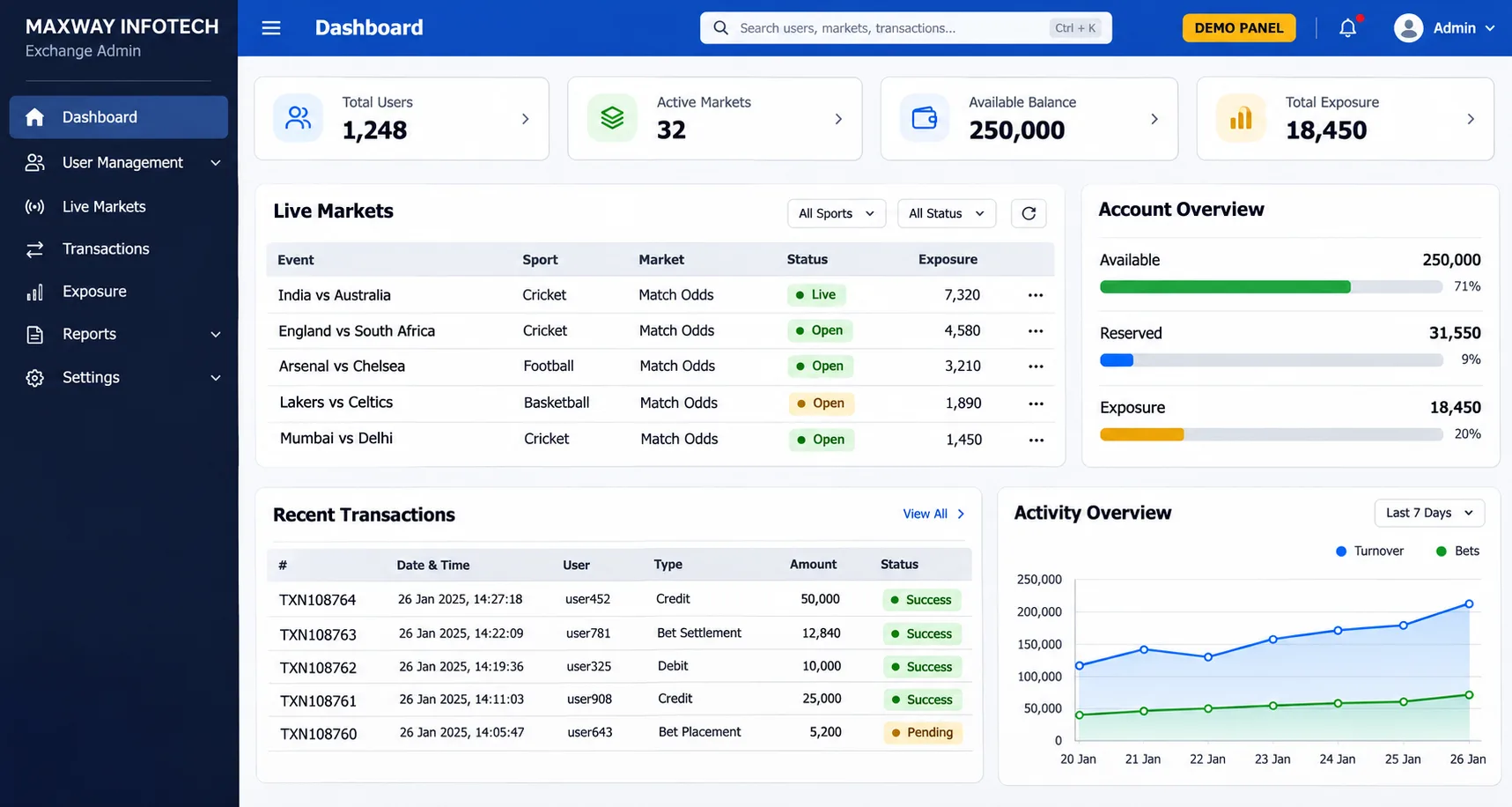
Choosing a Diamond Exchange panel provider starts with a clear question: what will your team actually control after handover? An exchange administration panel should make account permissions, market activity, exposure and reporting understandable to the people responsible for daily operations.
Maxway Infotech offers software development and integration services for business platforms. Use this guide to define your panel requirements, assess a demonstration and prepare a project brief. The final scope, supported services and commercial terms should be confirmed in your proposal.
Quick answer: A Diamond Exchange panel provider supplies or develops an administration interface associated with an exchange platform. Depending on the agreement, it may include role management, market monitoring, exposure controls and reports. API access, data rights, hosting, source code and support must be confirmed separately.
What Does a Diamond Exchange Panel Provider Deliver?
The panel is the working interface used by an operations team. It can bring account records, market information and reporting into one place, with permissions determining who can view or change each part of the system.
The same product name can appear in proposals with very different deliverables. One supplier may offer access to hosted software. Another may propose a branded interface connected to an existing platform. A development partner may build a custom administration layer around services your business already uses.
Ask for a written inclusion list before comparing quotes. It should identify the software being supplied, the contracting entity, upstream providers and any functions that require additional approval. A product label or familiar screen design does not establish authorization to access a third-party service.
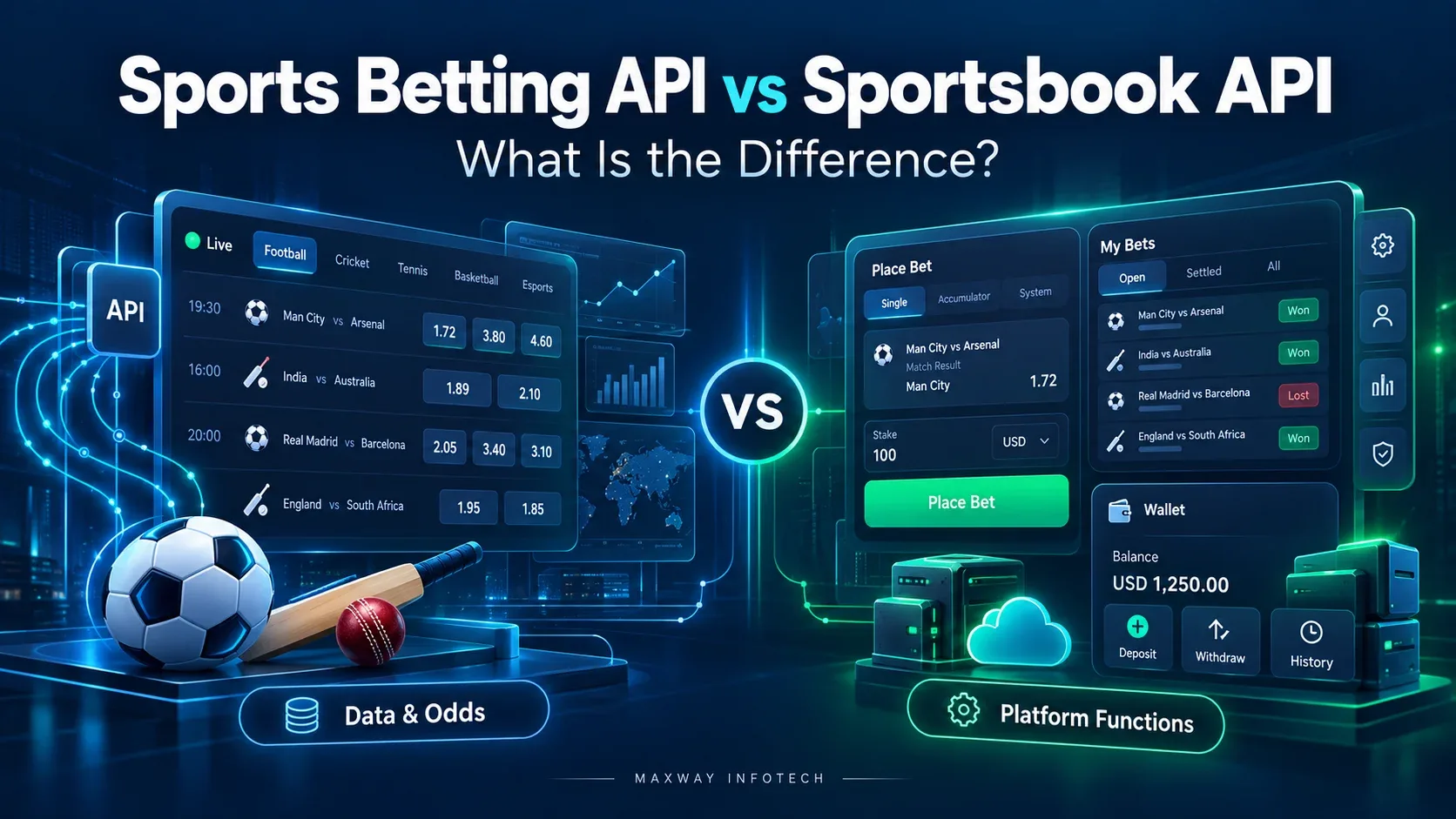
Diamond Exchange Panel, API and White Label: Know the Difference
| Component | Main purpose | What to confirm |
|---|---|---|
| Admin panel | Provides an interface for operational tasks and reports. | Permissions, workflows, record visibility and included controls. |
| Exchange API integration | Connects software to supported data or transaction services. | Documented access, permitted use, available operations and commercial rights. |
| White label platform | Provides a branded platform based on an existing software product. | Customization limits, recurring fees, hosting and ownership. |
| Custom development | Builds software around an agreed business specification. | Acceptance criteria, maintenance responsibilities and intellectual property terms. |
A panel does not automatically supply an exchange matching engine, trading liquidity, an authorized data feed or payment services. These dependencies need their own specifications. For connection-specific requirements, review Maxway's Diamond Exchange API integration services alongside the panel brief.
Panel Features to Include in Your Requirements
User Roles and Account Permissions
Define roles around actual responsibilities. An administrator might configure the platform, an operations user might review markets, and a finance user might reconcile records. Each role should receive only the access required for its work.
Test restrictions with separate demonstration accounts. Check whether a reporting user can change a limit, whether a supervisor can see another team's records and whether disabled accounts lose access. A hidden button alone is not evidence that the underlying action is restricted.
Market Visibility and Exposure Controls
Specify which market states operators need to see: open, suspended, closed, settled or corrected. Ask how the panel communicates delayed data and distinguishes matched from unmatched activity where the connected platform supports that distinction.
Exposure controls should have an agreed meaning. Define the accounts and markets covered, the update frequency and what happens when an action would exceed a limit. For example, a useful demonstration can show an attempted action being rejected and its reason appearing in the activity history.
Wallet Records, Commissions and Reconciliation
A displayed balance is only one part of a financial record. Buyers should also specify a transaction history with references, timestamps, statuses and a traceable relationship to adjustments or settlements.
Request a sample reconciliation report. Your finance team should be able to follow an entry from its source reference to the corresponding ledger record and report total. If commissions are included, define the calculation basis, rounding and treatment of reversals before development begins.
Audit History and Operational Reports
Important administrative changes should be attributable to a user and time. Ask for the previous and new values where appropriate, the reason for a manual adjustment and the period for which records remain available.
Reports should answer everyday questions without requiring database access. Useful examples include unresolved items, account activity, permission changes and settlement differences. Agree on export formats and access restrictions so reporting remains useful during handover or a later migration.
API Integration and Data Access
Diamond Exchange API integration should begin with documented access and a confirmed list of supported operations. Do not assume that a generic integration description proves access to a particular platform or market.
Identify which system owns account records, market status, balances and settlement decisions. This prevents disagreements when two systems display different values. Also confirm whether data may be stored, redistributed or shown in your intended jurisdictions.
Include interrupted connections in the requirements. Ask what operators see when information becomes stale, how uncertain requests are investigated and how records are reconciled after service resumes. These are acceptance questions for the selected integration, not promises that every API supports the same behavior.
If your project also needs other sports services, discuss the wider scope through Maxway's sports betting API integration page. Keep each provider's rights, fees and limitations explicit.
A Practical Panel Demonstration Checklist
Ask the provider to demonstrate an agreed set of scenarios in a permitted test environment. Use synthetic accounts and test records rather than live customer information.
- Permission check: Sign in as two different roles and show which actions each can perform.
- Record trace: Follow one test transaction from its reference through the ledger and report.
- Limit check: Demonstrate the agreed response when a configured threshold is reached.
- Service interruption: Show how the interface indicates unavailable or stale upstream information.
- Correction check: Demonstrate how an authorized correction appears in the audit trail.
- Export check: Produce a usable report and explain what can be exported at contract termination.
Record results against the same checklist for every supplier. This gives your team a more useful comparison than a feature count or a polished dashboard screenshot.
Implementation: From Requirements to Handover
Start with a discovery brief covering the permitted target markets, users, required workflows, existing systems and external dependencies. Resolve access rights and legal feasibility before committing to a launch plan.
Next, turn the brief into an agreed scope. List included screens, roles, reports, integrations and exclusions. Record the acceptance conditions for each significant workflow and identify who supplies credentials, hosting and test data.
Review the interface with the people who will use it. Operations staff may need rapid filtering and clear exceptions; finance users may need consistent references and exports. Catching these differences during design reduces avoidable revisions.
Before handover, complete functional testing, permission checks and agreed performance tests. Performance evidence should state the test environment, workload and measured response times. A claim that software “handles high traffic” is too vague to use as an acceptance condition.
Finish with administrator training, recovery documentation, a support escalation route and written acceptance. If the project includes a customer-facing site, assess the broader sports betting website development scope separately from the administration panel.
What Affects Diamond Exchange Panel Pricing?
The cost of an exchange panel project depends on what is supplied and who operates it. A hosted access agreement and a custom software build can have different upfront charges, recurring costs and ownership outcomes.
Request separate line items for setup, design changes, integrations, hosting, maintenance and external provider fees. Ask whether recurring charges are fixed, usage-based or linked to another commercial measure, and define that measure in the contract.
Other cost drivers include the number of roles, report complexity, migration requirements, environments, support coverage and testing obligations. Source-code delivery or extensive customization may change the proposal considerably.
Compare total cost over the same operating period. Include minimum commitments, change requests, renewal terms and exit assistance. A low setup fee is difficult to assess without knowing what the continuing service includes.
Hosting, Support and Ownership Terms
Confirm who controls the domain, hosting account, backups and administrator credentials. Agree on backup responsibilities, restoration testing and the process for recovering access if a key staff member leaves.
Support terms should distinguish response time from resolution time. Define severity levels, support hours, escalation contacts and how upstream outages are handled. Do not assume that general availability claims create a contractual service commitment.
Ownership needs separate attention. Access to a branded panel does not necessarily include source code, intellectual property rights or the right to move the application elsewhere. Document ownership of custom work, access to operational data, export formats and any third-party license restrictions.
India-Based Buyers: Confirm the Permitted Use First
The location of a software developer does not determine where a platform may legally operate. A March 2026 Government of India statement describes the Promotion and Regulation of Online Gaming Act, 2025 as prohibiting online money games, their promotion and facilitation, and related financial transactions.
An India-focused search keyword should therefore not become a claim that Indian real-money betting is permitted. Before procurement or deployment, obtain qualified advice on the proposed activities, current applicable rules, target jurisdictions, licensing and cross-border arrangements. An overseas license or a technology contract should not be treated as permission to serve Indian users.
For the government source, see the 18 March 2026 statement on the Online Gaming Act. Build the project brief around a use and market that have been confirmed as lawful.
Discuss Your Panel Requirements with Maxway Infotech
Prepare a short brief with your intended permitted markets, existing platform, required user roles, reporting needs and preferred ownership model. Include any documented third-party access already available to your business.
When evaluating a Diamond Exchange panel provider, ask for a scope-specific demonstration and a written proposal covering dependencies, delivery stages, acceptance criteria and ongoing costs. This makes the commercial discussion concrete and gives both teams a clear basis for delivery.
Contact Maxway Infotech to discuss your panel requirements and establish the technical and commercial scope for your proposed project.
Frequently Asked Questions
What is a Diamond Exchange panel provider?
A Diamond Exchange panel provider supplies or develops an administration interface for an exchange platform. Included controls, connected services, hosting and support depend on the written agreement.
Is an exchange panel the same as an exchange API?
No. A panel is an interface used by an operations team. An API connects software systems. A project may need both, but access rights, capabilities and fees should be specified separately.
Does a panel purchase include official Diamond Exchange access?
Do not assume it does. Ask the supplier to identify the upstream service and provide documentary evidence of the access and usage rights included in your agreement.
What determines the cost of a panel project?
Cost depends on the delivery model, customization, user roles, reports, integrations, hosting, support and ownership terms. Request an itemized quote covering setup, recurring charges and external provider fees.
Can an existing website be connected to the panel?
Potentially, if the website, panel and authorized APIs are compatible. A technical assessment should confirm account mapping, permissions, record ownership and integration limitations before a commitment is made.
What should a provider demonstrate before selection?
Request demonstrations of role restrictions, traceable records, limit handling, stale-data indicators, authorized corrections and usable exports. Evaluate the same scenarios across suppliers in a permitted test environment.
Who owns the source code and operational data?
Ownership is contractual. Hosted access does not automatically include source code or intellectual property rights. Confirm data access, export formats, custom-work ownership and termination assistance in writing.
Can an India-based business use this for Indian real-money betting?
Do not treat a software purchase as permission to offer Indian real-money betting. A March 2026 Government of India statement describes prohibitions on online money games and related promotion, facilitation and financial transactions. Obtain current, project-specific legal advice before proceeding.