
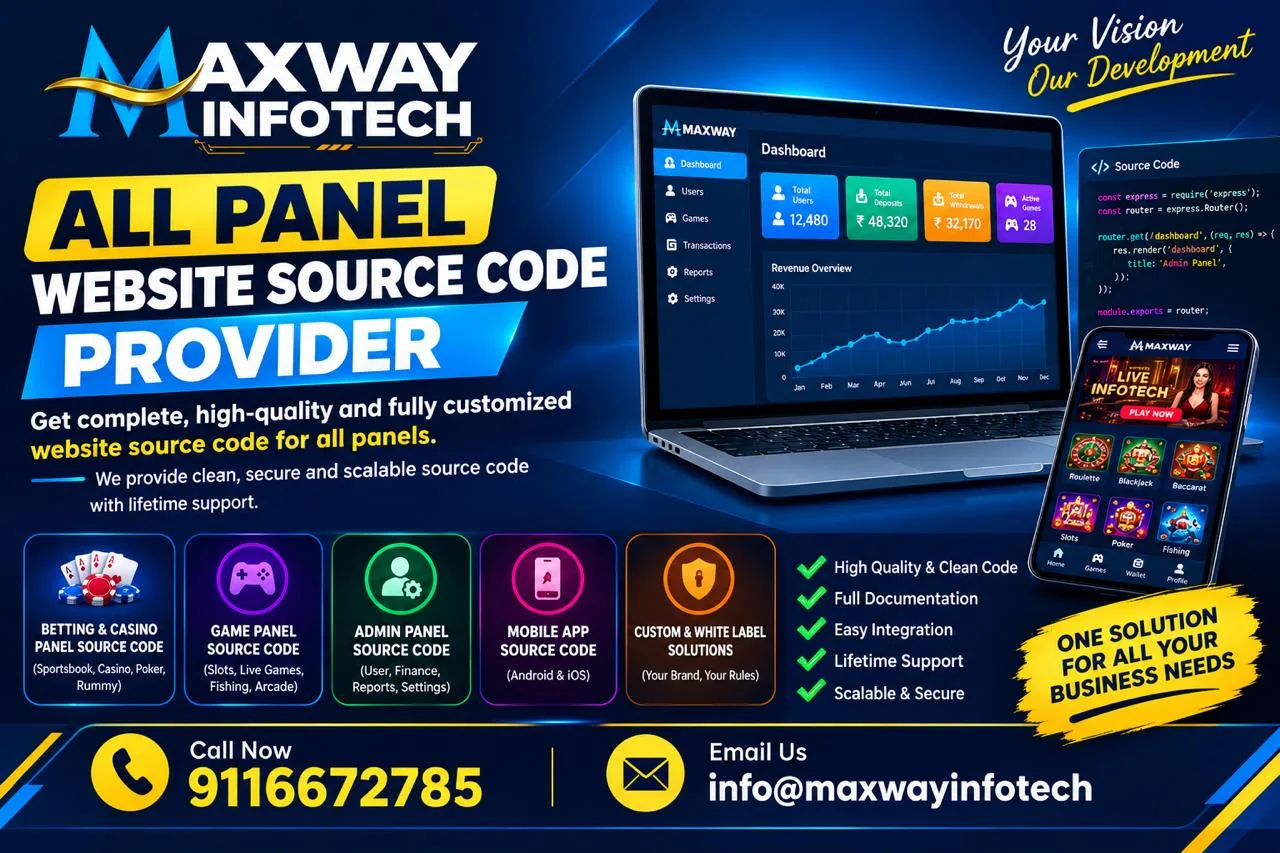
All Panel Website Source Code Providers
Introduction to All Panel Website Source Code Providers
All Panel Website Source Code Providers help businesses and entrepreneurs explore website development solutions tailored to their technical requirements and business objectives. A well-developed website requires a structured codebase, responsive design, reliable performance, appropriate security measures, and a user-friendly interface. Choosing an experienced development provider can help businesses understand their options and build a website that supports their long-term digital goals.
Whether you are planning a business portal, a management dashboard, a customer platform, or a customized web application, selecting the right source code provider is an important step. Professional developers can assist with planning, implementation, testing, customization, and ongoing technical support according to the project's scope.
What Are All Panel Website Source Code Providers?
All Panel Website Source Code Providers are companies or development professionals that offer website source code, software customization, or related web development services. Depending on the provider, these services may include front-end development, back-end programming, database integration, administrative dashboards, user management, and third-party API connectivity.
Source code is the underlying set of instructions that determines how a website or application works. Access to properly documented source code can help authorized website owners maintain their platforms, introduce new features, and work with developers when updates are required.
Before choosing a provider, businesses should confirm exactly what is included in the package, whether the code is original or licensed, and what usage rights are provided.
Key Features to Look for in a Source Code Provider
1. Customizable Website Development
Every business has different operational requirements. A suitable provider should offer customization options that allow website owners to adjust layouts, navigation, branding, and supported functionality. Customizable solutions can help businesses create a consistent digital identity while accommodating future changes.
2. Responsive User Interface
A modern website should work smoothly across desktops, laptops, tablets, and smartphones. Responsive layouts improve accessibility and make it easier for visitors to navigate pages on different screen sizes.
3. Secure Coding Practices
Security should be a priority throughout the development process. Providers should follow appropriate coding standards, validate user inputs, protect sensitive information, and apply suitable authentication and authorization controls. Regular updates and security testing can further reduce common website vulnerabilities.
4. Performance Optimization
Website performance affects usability and visitor experience. Efficient code, optimized images, appropriate caching, and well-structured database queries can help improve loading times. Developers should also test websites under realistic conditions before deployment.
5. Administrative Dashboard
Depending on the application, an administrative dashboard can help authorized users manage website content, review activity, update settings, and maintain user accounts. The dashboard should have clear navigation and access permissions appropriate to each role.
Benefits of Choosing a Professional Provider
Working with a professional development team can help businesses organize their technical requirements before investing in a website. Experienced developers can evaluate project complexity, recommend suitable technologies, and identify potential maintenance challenges early in the process.
Another advantage is access to technical guidance. Businesses may need assistance with server configuration, database management, deployment, software updates, or troubleshooting. A provider with clearly defined support services can make these responsibilities easier to manage.
A properly documented source code package can also improve maintainability. When the codebase follows established development practices, future developers may find it easier to identify issues, add features, and implement improvements without rebuilding the entire platform.
How to Choose the Right All Panel Website Source Code Provider
Evaluate Experience and Technical Expertise
Review the provider's development experience, relevant portfolio, programming knowledge, and ability to explain technical decisions. Ask whether the team has worked on projects with requirements similar to yours.
Check Source Code Quality
Request information about the programming languages, frameworks, dependencies, and database technologies used. Well-organized code, meaningful documentation, and a clear installation process are important considerations.
Understand Licensing and Ownership
Before purchasing source code, review the license agreement carefully. Confirm whether you receive commercial usage rights, modification rights, redistribution permissions, or exclusive ownership. These terms can differ significantly between providers.
Compare Pricing and Deliverables
Do not evaluate providers on price alone. Compare the features included, customization charges, installation assistance, hosting requirements, documentation, and post-delivery support. A written scope of work can help prevent misunderstandings.
Review Maintenance and Support
Websites require ongoing maintenance to remain compatible with updated browsers, frameworks, and server environments. Ask about bug fixes, security updates, response times, and any recurring support fees.
Importance of SEO-Friendly Website Development
Search engine optimization should be considered during the development stage. An SEO-friendly website typically uses logical page structures, descriptive titles, useful meta descriptions, clean URLs, responsive layouts, and relevant internal links.
Developers can also help configure XML sitemaps, canonical tags, structured data where appropriate, and performance improvements. However, technical SEO alone cannot guarantee search engine rankings. High-quality content, useful information, a positive user experience, and consistent optimization also contribute to organic visibility.
Businesses should ensure that every landing page offers distinct value rather than publishing repetitive pages created only to target different keywords.
Technology and Customization Options
Depending on the project's needs, providers may work with technologies such as PHP, JavaScript, Python, HTML, CSS, and modern application frameworks. Database options and hosting environments should be selected according to expected traffic, functionality, security requirements, and maintenance capabilities.
Third-party integrations may include payment services, analytics tools, customer relationship management systems, or other authorized APIs. Before integration, businesses should verify provider documentation, data handling practices, usage restrictions, and applicable compliance requirements.
The right technology stack is the one that supports the project's actual needs without introducing unnecessary complexity.
Common Mistakes to Avoid
Businesses should avoid purchasing source code without understanding its functionality, licensing conditions, or technical requirements. Unverified providers, undocumented software, hidden charges, and unrealistic performance promises can create unnecessary risks.
It is also important not to overlook testing. Before launching a website, check its navigation, forms, permissions, mobile responsiveness, database operations, and error handling. Maintain secure backups and establish a process for applying updates.
For platforms that involve payments, personal information, or regulated activities, conduct additional security, legal, and compliance reviews before deployment.
Future of Website Source Code Solutions
Website development continues to evolve through automation, cloud infrastructure, improved security tools, and more flexible application frameworks. Businesses increasingly need platforms that are maintainable, accessible, and capable of integrating with existing software.
Providers that prioritize clean architecture, transparent licensing, reliable support, and responsible development practices can help businesses adapt to changing technical requirements. Choosing a solution with room for future improvements can be more valuable than selecting a package based only on its initial cost.
Conclusion
All Panel Website Source Code Providers can help businesses find suitable foundations for customized websites and web applications. The best choice depends on source code quality, customization capabilities, security standards, licensing terms, performance, and ongoing support.
Before making a decision, compare providers carefully, verify their experience, and ensure that the deliverables match your business requirements. A well-planned website project can provide a more maintainable technical foundation, improve user experience, and support long-term digital growth.